Teaching with Technology
Implementation of Key Pedagogical Techniques – Active Recall
Research consistently shows that students learn more effectively when they are required to actively recall information during a lesson, rather than waiting until the end (Palomba & Banta; Faculty Focus on student-centered formative assessment).
Over time, it becomes clear that questions are not interruptions to learning or merely rhetorical devices—they are a primary mechanism for activating curiosity and reinforcing understanding. When students are prompted to think, retrieve, and respond, they strengthen their grasp of the material in real time.
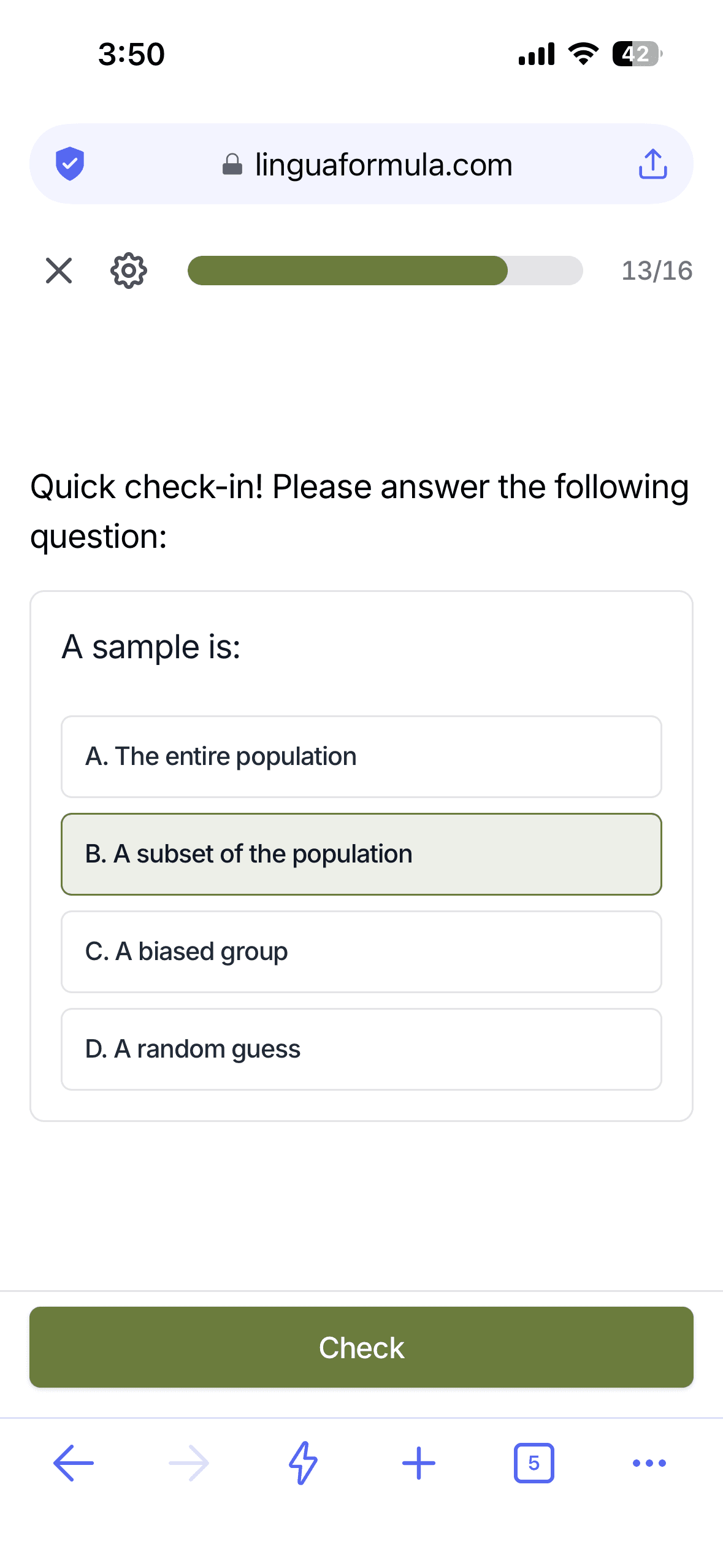
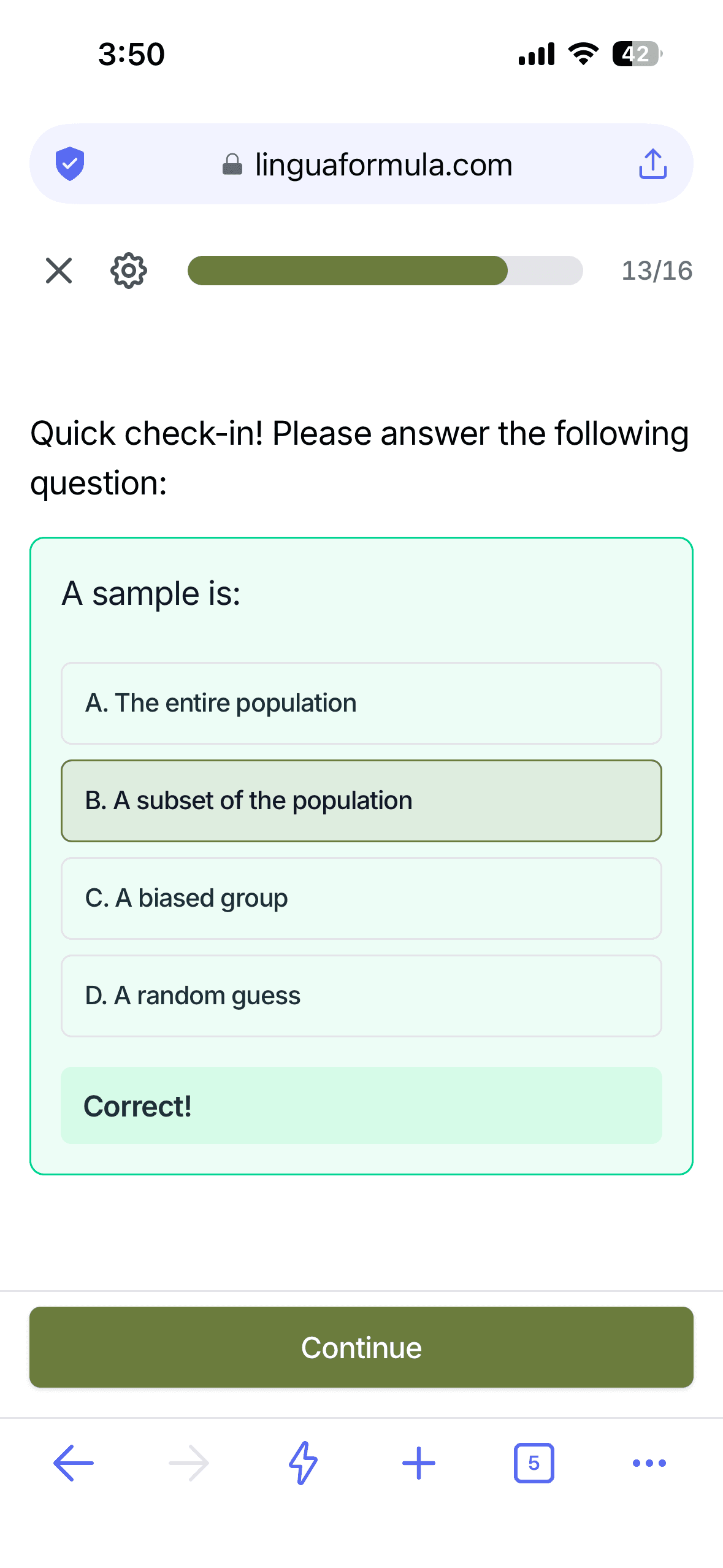
Lingua Formula, a teaching application I am developing, implements this principle by embedding questions directly within lesson content rather than reserving them for the end. These inline questions prompt students to pause, retrieve relevant information, and apply it immediately, transforming the lesson from a passive reading experience into an active process of engagement, recall, and feedback.
The following screenshots from the mobile app illustrate how questions and immediate feedback are integrated directly into the lesson.
Mobile Lesson Pages
Implementation of Key Pedagogical Techniques – Narrative Structure
Research in educational psychology shows that learners understand and retain information more effectively when it is presented within a coherent narrative structure rather than as isolated facts. Narrative provides context, sequence, and meaning, helping students organize new information and connect it to prior knowledge (Mayer, Multimedia Learning; Clark & Mayer, E-Learning and the Science of Instruction).
This aligns with an important realization in my own teaching: technical material becomes more accessible when it is introduced through familiar, story-like patterns. Rather than presenting definitions and formulas in isolation, framing ideas within a narrative allows students to recognize underlying concepts as extensions of their own experience.
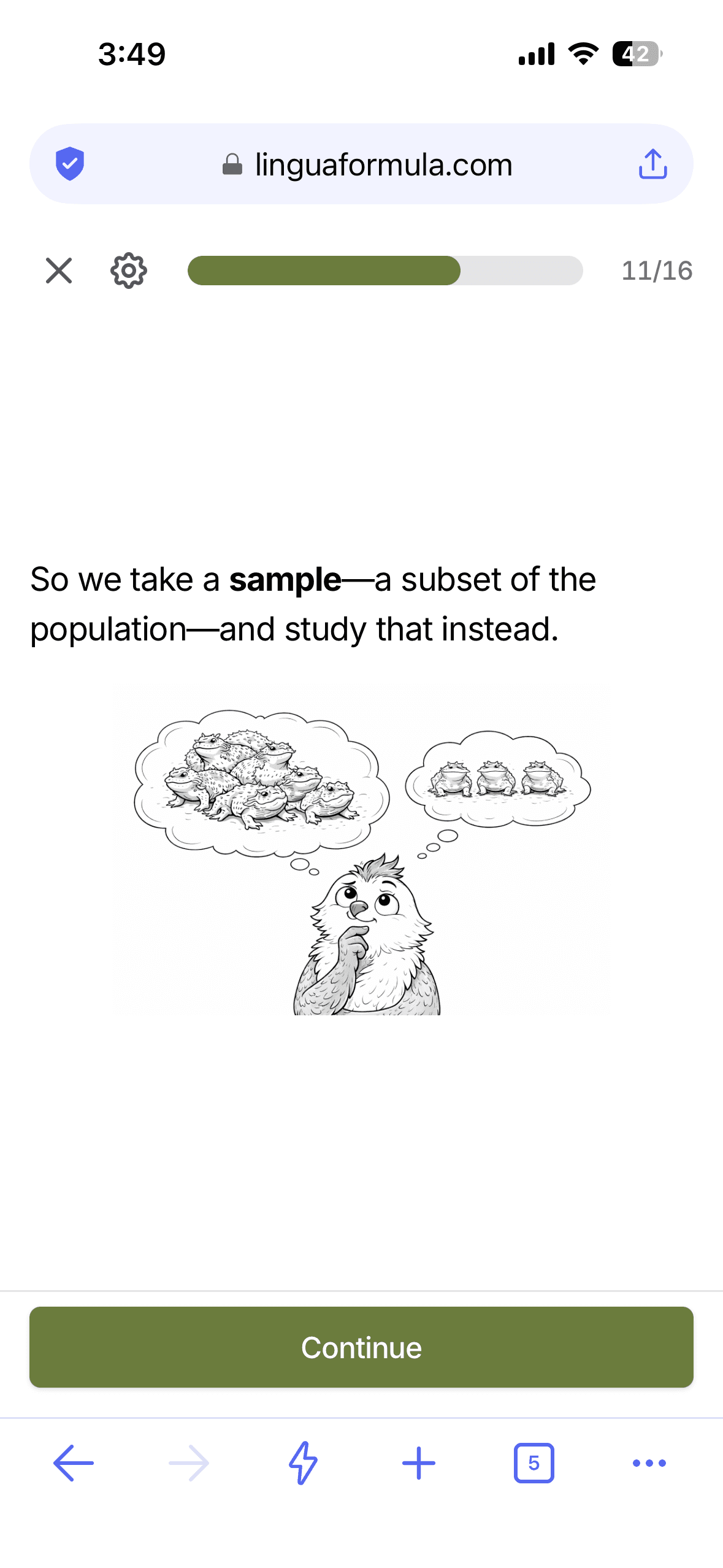
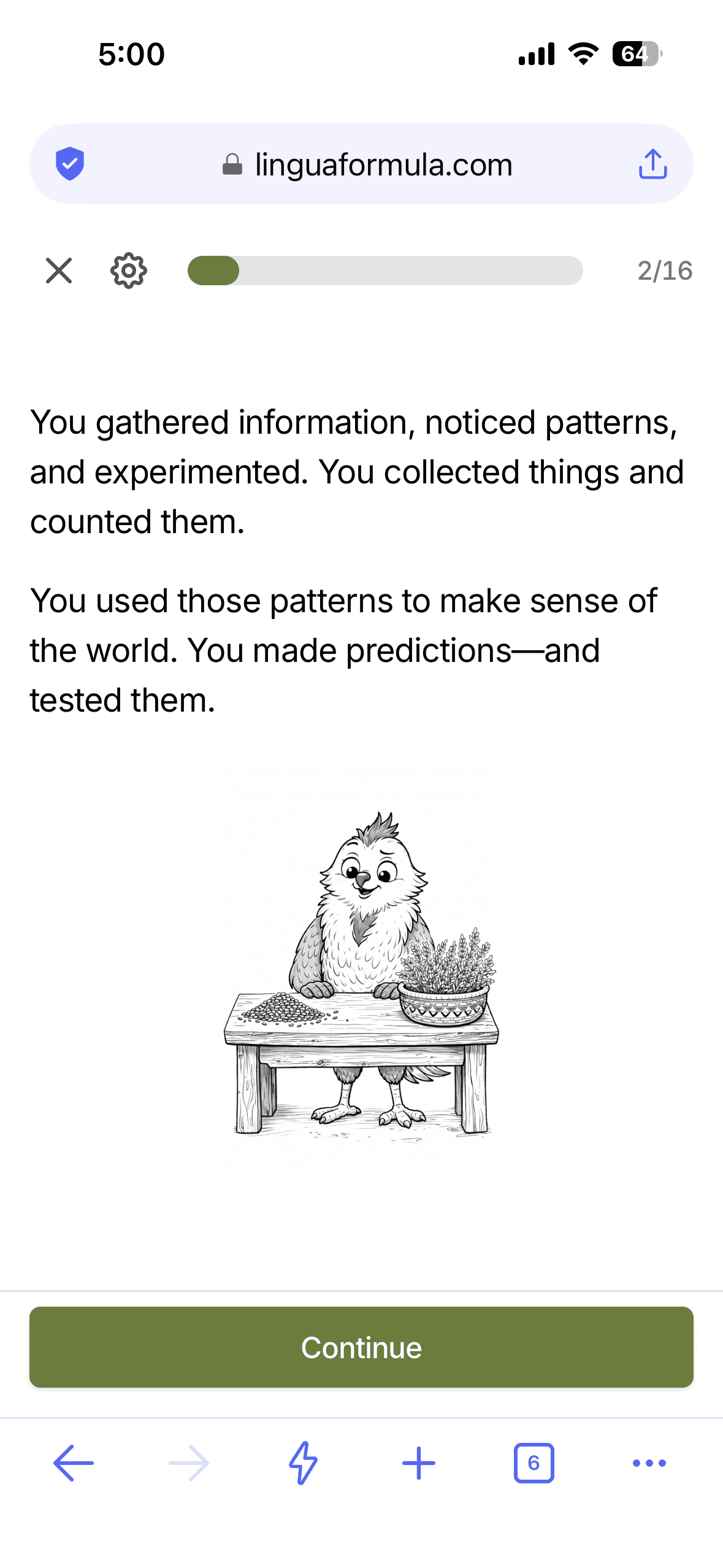
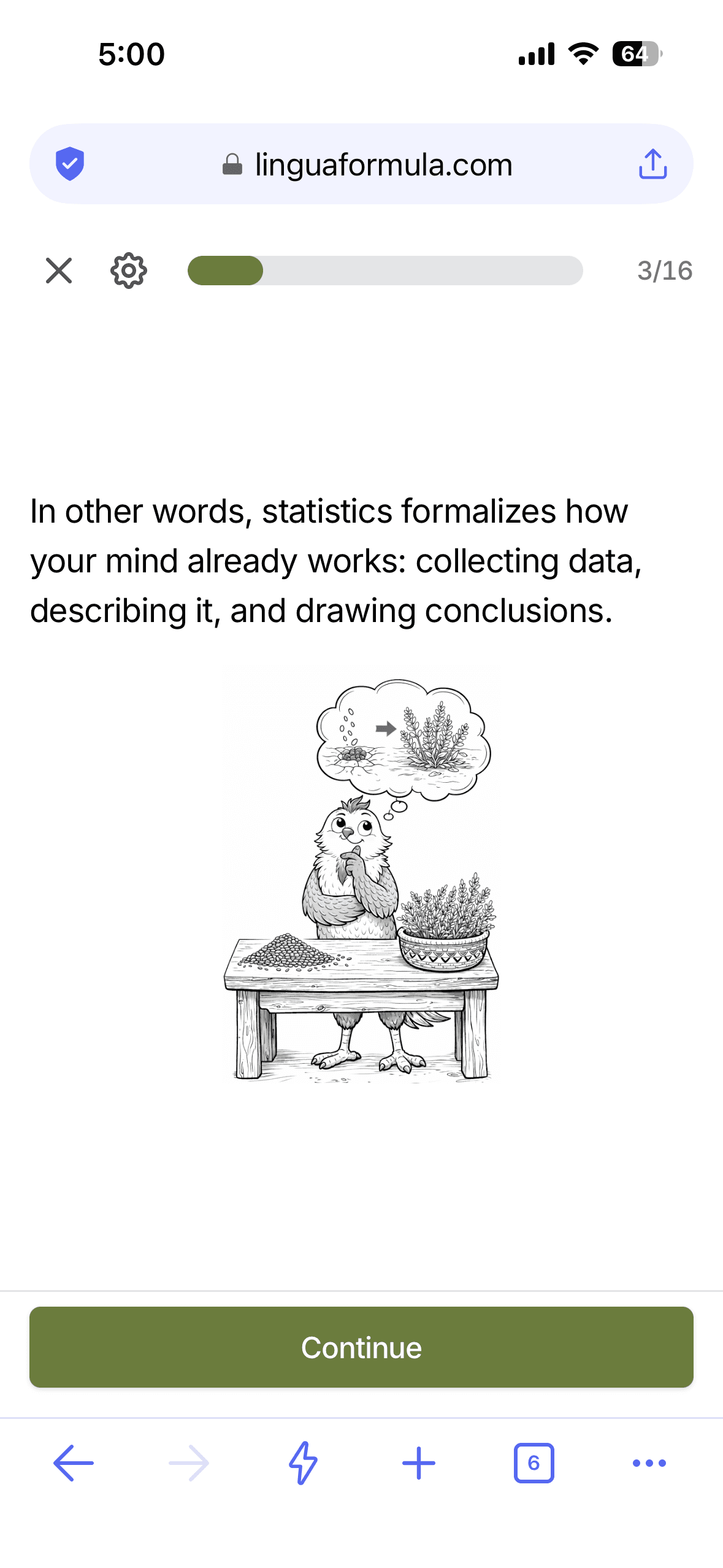
Lingua Formula incorporates this principle by embedding short, visual narratives directly into lessons. Characters such as “Professor Sage” are used to introduce concepts, pose questions, and guide students through sequences of ideas. These narratives provide continuity across lesson elements and help transform abstract material into something more intuitive and engaging.
The following screenshots illustrate how narrative elements and visual storytelling are integrated into mobile lesson pages.

Implementation of Key Pedagogical Techniques – Accessibility
Effective teaching with technology requires that learning environments be accessible to all students, including those with visual, cognitive, and other diverse needs. Principles from Universal Design for Learning (UDL) emphasize providing multiple means of representation and ensuring that content is perceivable and usable across a wide range of contexts and abilities (CAST UDL Guidelines).
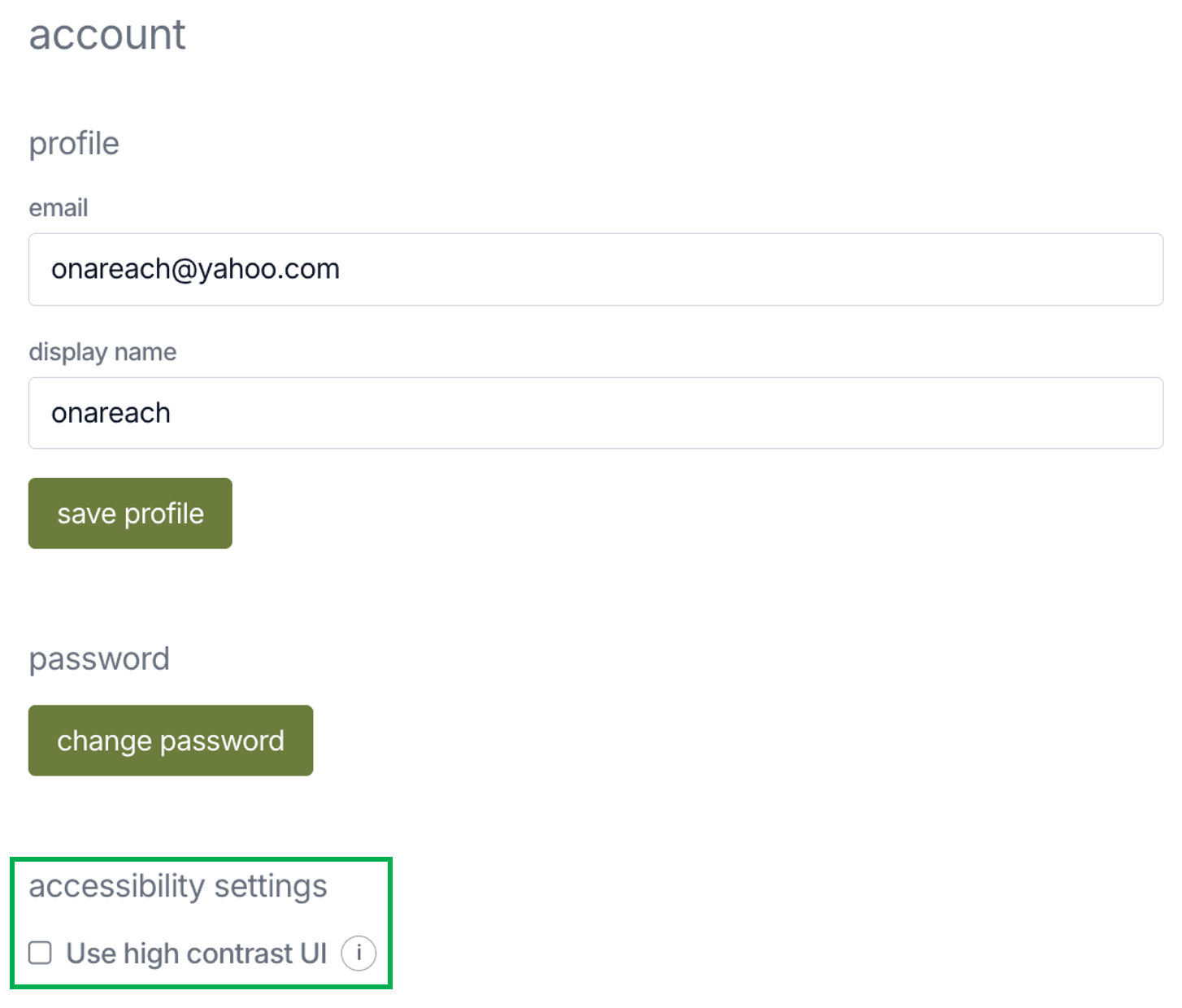
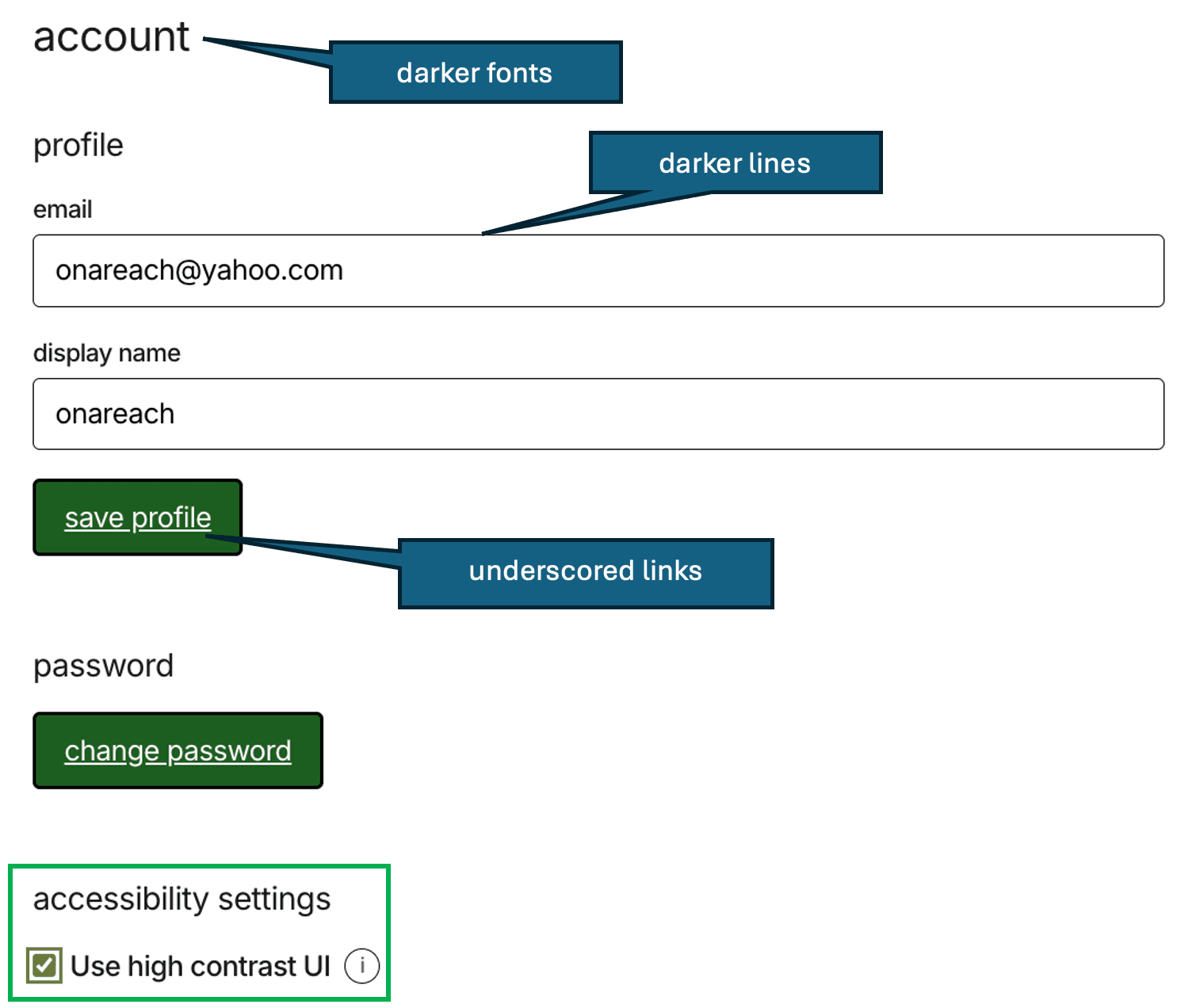
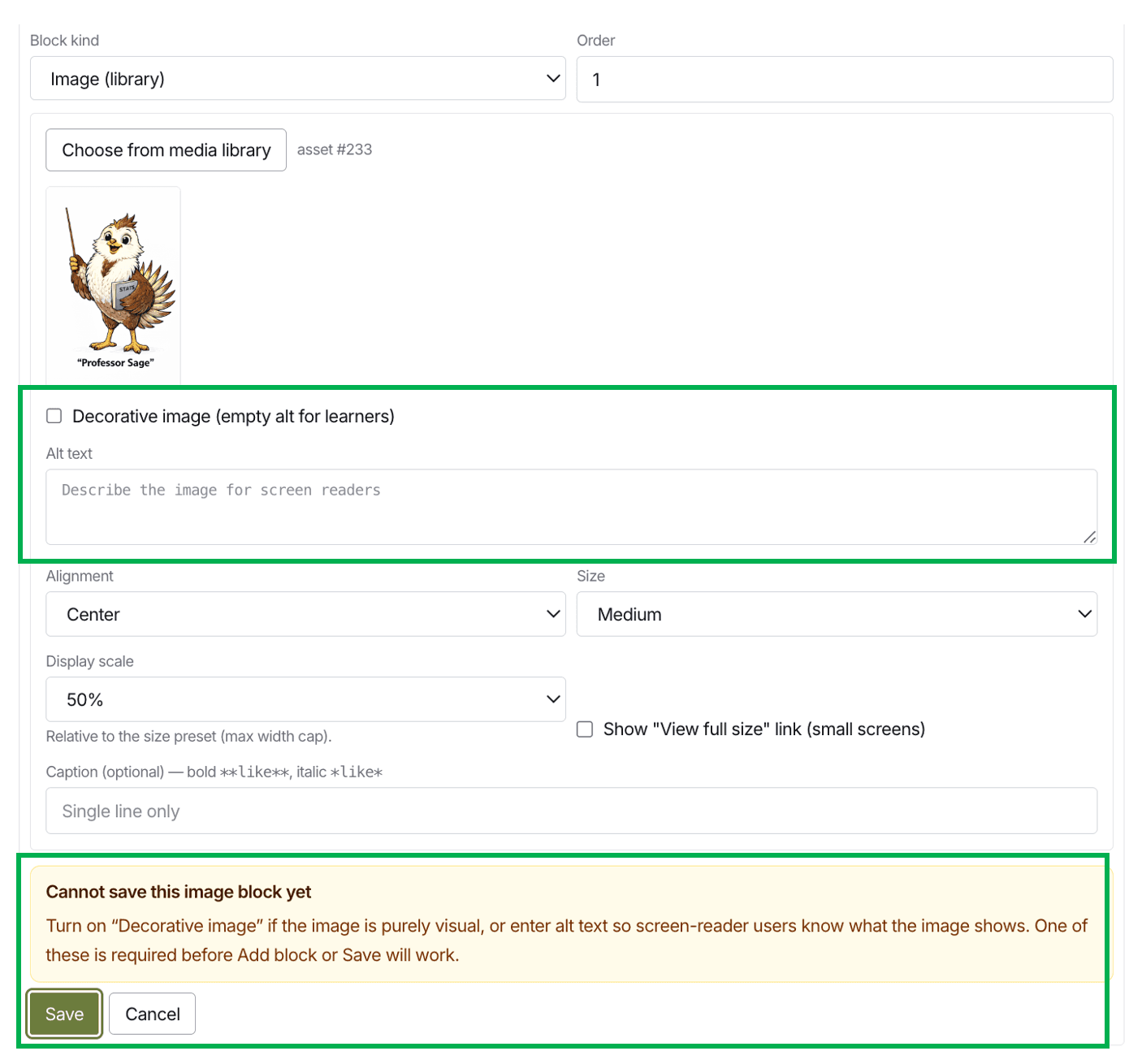
This perspective has shaped the design of Lingua Formula in two key ways. First, the platform includes user-controlled display options, such as a high-contrast mode, allowing students to adjust the visual presentation of content to suit their needs. Second, accessibility is built into the content creation process itself. When adding images, the lesson editor requires the inclusion of alternative text unless an image is explicitly marked as decorative, ensuring that visual content remains interpretable for students using screen readers.
Together, these features reflect a broader design principle: accessibility should not be treated as an afterthought, but as an integral part of both the user experience and the authoring workflow.
The following screenshots illustrate these accessibility features in practice.
User Level Accessibility Settings
Editor Level Accessibility Enforcement
Editing pages—used by developers and administrators—enforce CAST accessibility standards. For example, images must include alternative text for screen readers; otherwise, the system will not allow the content to be saved.
Implementation of Key Pedagogical Techniques – Feedback and Metacognition
An important pedagogical rule is that students learn more effectively when they are able to monitor their own progress and reflect on their understanding. Timely feedback and opportunities for self-assessment help learners identify gaps, adjust their strategies, and take greater ownership of their learning process (Faculty Focus on learner reflection and feedback).
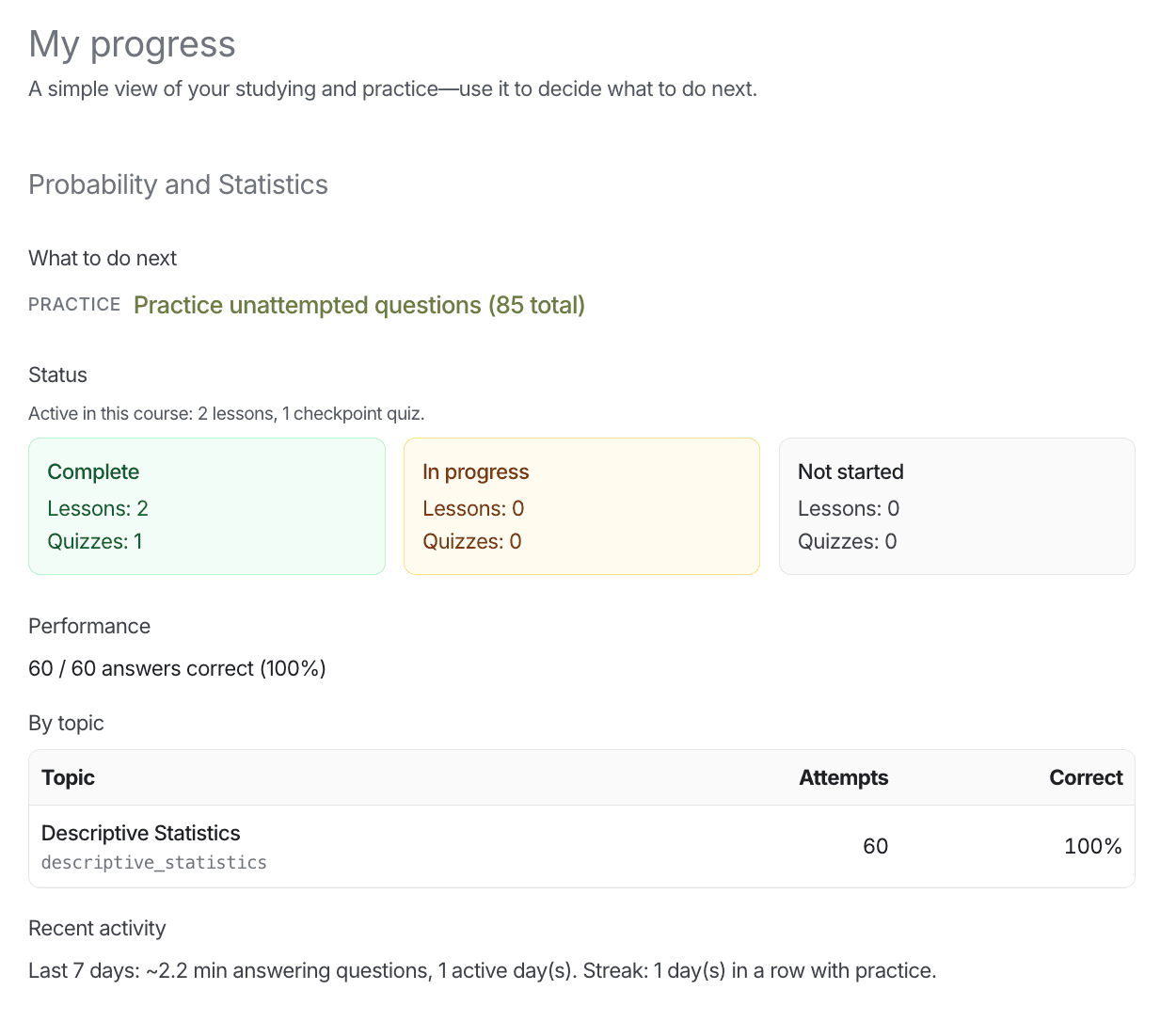
Lingua Formula supports this principle through a dedicated “My Progress” page, which serves as the default student dashboard. This page provides a clear, ongoing view of progress through lessons and assessments, along with feedback on performance and recent activity. By making this information continuously visible, the system encourages students to reflect on their learning habits, recognize areas that need attention, and engage more intentionally with the material.
The following screenshot illustrates how progress and feedback are presented within the student interface.
Summary Telemetry – User Activity Tracking
A key component of effective learning is the ability to reflect not only on what one knows, but on how one is engaging with the learning process. Research on feedback and learner reflection emphasizes the importance of making patterns of activity visible so that both students and instructors can better understand effort, attention, and engagement over time (Faculty Focus on learner reflection and feedback).
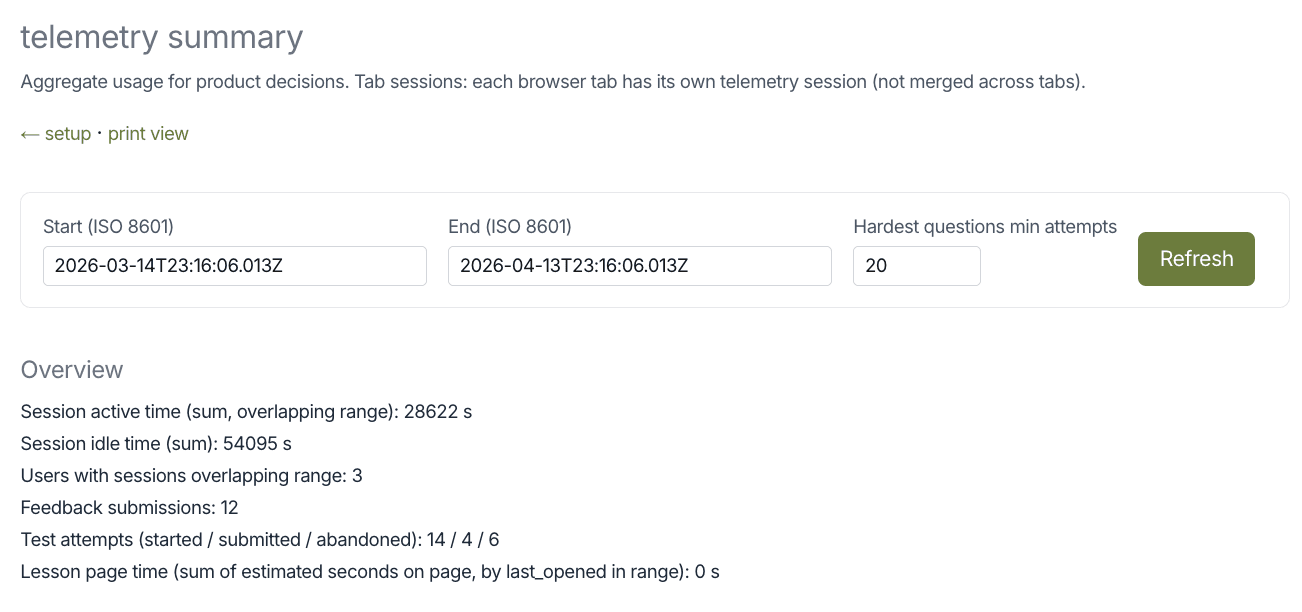
Lingua Formula supports this principle through a telemetry summary view that aggregates student activity across configurable time ranges. Rather than focusing solely on outcomes, this page highlights patterns of engagement—such as active and idle time, session behavior, and assessment activity—providing a more complete picture of how learning is occurring. By surfacing this information, the system enables more informed reflection, helping identify habits that support or hinder progress.
Daily Activity and Performance
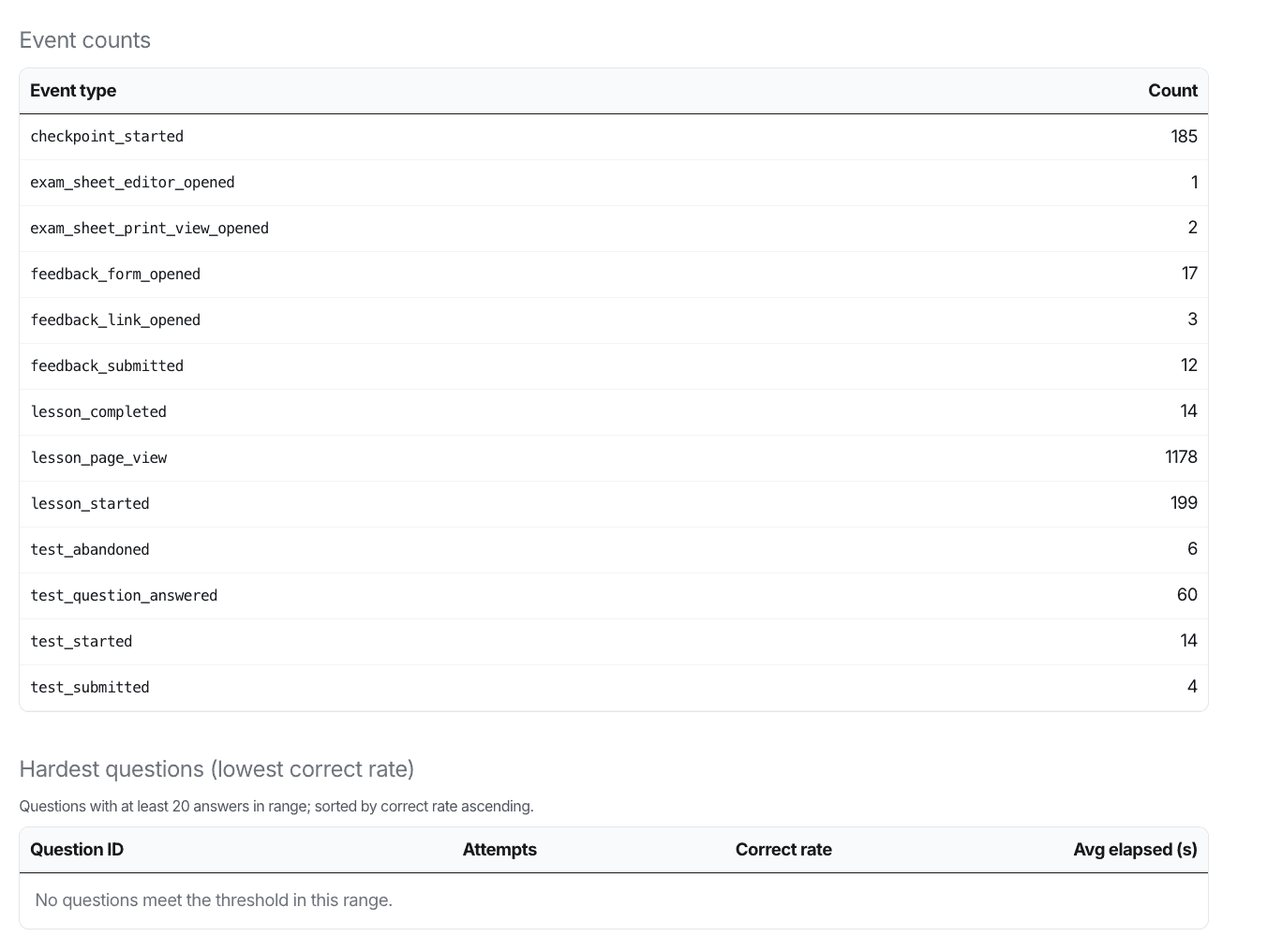
In addition to high-level summaries, effective feedback systems benefit from more granular insight into how students interact with course material. Detailed activity data can reveal not only what students complete, but how they move through lessons, where they hesitate, and where they disengage. This level of visibility supports both instructor decision-making and student self-reflection by making patterns of behavior explicit (Faculty Focus on learner reflection and feedback).
Lingua Formula provides a detailed activity view that tracks specific student interactions, such as lesson engagement, checkpoint progression, assessment behavior, and feedback submission. By capturing events like lesson views, test attempts, and question responses, the system builds a fine-grained picture of how learning unfolds over time.
In addition, the platform identifies the most challenging questions based on aggregate performance, highlighting areas where students are more likely to struggle. This allows instructors to refine content and enables students to focus their attention where it is most needed.
Beta User Feedback System
An effective learning system not only tracks user activity but also invites direct input from its participants. Research on feedback and learner reflection emphasizes that meaningful improvement depends on continuous, accessible channels for communication between learners and instructors (Faculty Focus on learner reflection and feedback).
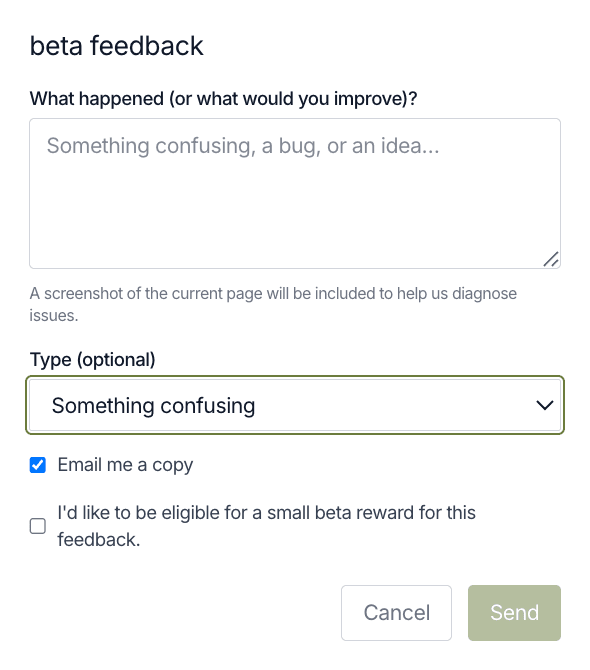
Lingua Formula incorporates this principle through an integrated feedback system available on every page of the application. With a single click, students and instructors can report issues, suggest improvements, or identify points of confusion in real time. Each submission is contextualized with an automatic screenshot of the page where the feedback was generated, ensuring that observations are grounded in the user’s immediate experience.
This “wrap-around” approach extends telemetry beyond passive observation, capturing intentional reflections alongside behavioral data. By combining structured activity tracking with user-generated feedback, the system creates a more complete picture of how the platform is being used and how it can be improved.
Conclusion – Integrating Pedagogy and System Design
Taken together, the features shown on this page reflect a consistent effort to translate established pedagogical principles into a working technological system. Rather than treating ideas such as active recall, narrative structure, accessibility, and metacognitive feedback as abstract guidelines, Lingua Formula attempts to embed them directly into the student experience and the underlying design of the platform.
A common thread across these implementations is the shift from passive consumption to active engagement. Students are prompted to retrieve information, interpret concepts within meaningful contexts, monitor their own progress, and contribute feedback that shapes the ongoing development of the system. At the same time, instructors are provided with tools and data that make patterns of learning more visible, allowing for more informed adjustments to content and delivery.
This work is still in an active stage of development, but the current system demonstrates how teaching with technology can move beyond content delivery toward a more responsive, interactive, and reflective learning environment. The goal is not simply to present information more efficiently, but to align the structure of the platform with the processes by which students actually learn.